Zlatko K. Minev

Hi, I'm

Zlatko K. Minev

Google Quantum AI; Former: IBM Quantum, Yale, Berkeley, CIFAR

I work where quantum hardware meets noise: designing superconducting circuits and combining error mitigation and correction for quantum applications.

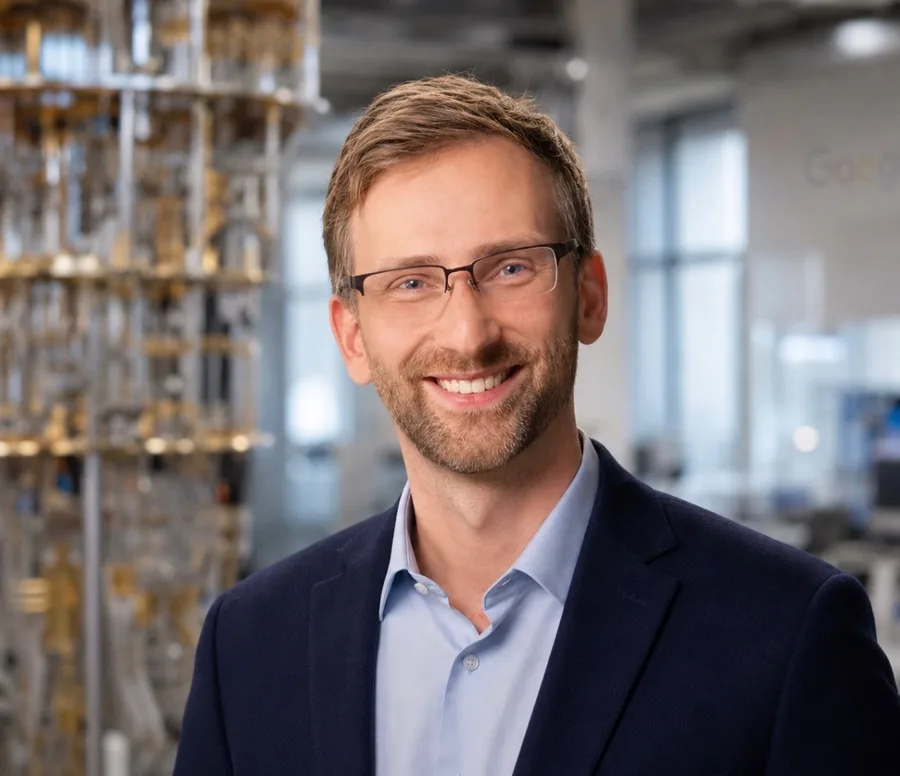
Portrait of Zlatko Minev

Lectures · talks · notes

Zlatko's Quantum Notebook

A free online library of my lecture slides, research talks and technical notes since 2011: 41 lectures and tutorials, 27 research talks and 8 technical notes, each with a short summary and a citation.

  • 76 decks and notes
  • 3,054 slides
  • 3,098 PDF pages in all
Open the Notebook →

Courses and learning paths

Take a course: slides, videos, notes and labs

Courses: Superconducting Qubits 101 · Introduction to Quantum Noise · Quantum Error Mitigation · A Primer on Pauli Twirling · Quantum Hardware Design with Quantum Metal and EPR · Quantum Measurement

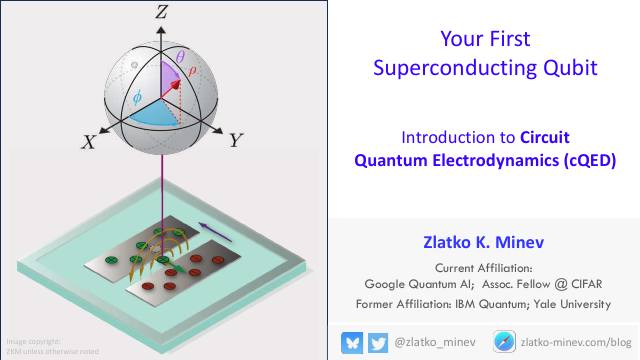
Superconducting Qubits 101: cQED Quantum HardwareOTOC-NMR Experiment: Error Mitigation, Modeling and ResultsA Prelude to Practical Quantum ComputingLife & Lessons as a Scientist in “Real Life” (career talk)Your First Superconducting Qubit: Intro to cQED, Part IYour First Superconducting Qubit: Intro to cQED, Part II
A processor, from package to logical qubit. The flashes are stabilizer checks. No logical errors were detected in this animation.

Now

What I'm working on these days

  • Error correction meets error mitigation

    Using only the syndrome record an error-corrected circuit already keeps, we remove the bias of residual logical errors in post-processing, without separate noise-characterization runs or changes to the circuit, at the cost of extra sampling.

  • Error mitigation from information dynamics

    A circuit's reactivity, a compact summary of how information spreads through it, governs how it responds to noise and which mitigation methods suit it.

  • Electromagnetics of large processors

    Large processors couple to the electromagnetic modes of their package. Four numerical methods for computing these couplings, energy participation among them, agree to within 5% on a simulated 10 × 10 transmon array.

All research themes

Highlights

A few stories along the way

Cover of Discover magazine's special issue The Science that Matters
Yale, 2011–2018 · Nature, 2019

Top discovery of the year: catching and reversing a quantum jump mid-flight

For my Ph.D. with Michel Devoret at Yale, we showed that a quantum jump, random in when it starts, follows a continuous and predictable path once under way, so it can be caught and reversed mid-flight. The experiment was once considered out of reach of experimental atomic physics.

In good company: Discover's cover that year promised DNA tests, CBD and Mars.
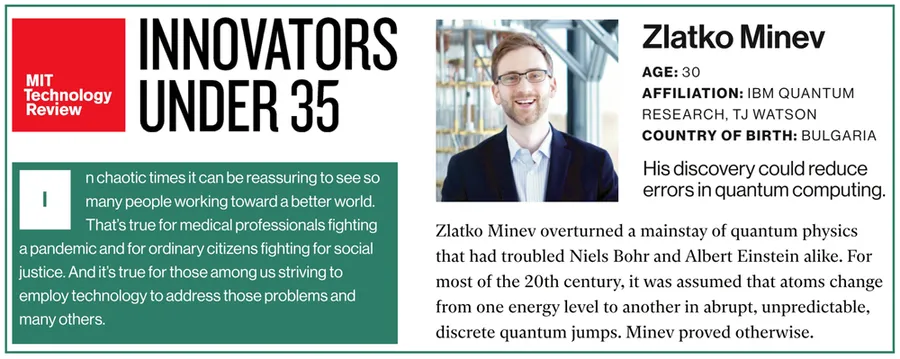
MIT Technology Review’s 2020 Innovators Under 35 feature on Zlatko Minev

Learning a quantum processor's noise, and canceling it

How much trustworthy science can a noisy quantum computer deliver before error correction? I started on that question when I founded the Qiskit Leap research team at IBM Quantum, and I'm still at it at Google Quantum AI. With Ewout van den Berg, Kristan Temme and colleagues, we built error-mitigation methods whose noise learning scales to large processors.

  • Sparse Pauli–Lindblad noise models (Nature Physics, 2023): learn the correlated noise of a whole processor efficiently, then cancel it with probabilistic error cancellation. Used to amplify the noise instead, the same learned model became the basis of the error mitigation in IBM’s 127-qubit “utility” experiment (Nature, 2023).
  • Model-free readout-error mitigation (TREX, Phys. Rev. A, 2022). Together with probabilistic error cancellation, it became a built-in option in Qiskit Runtime.
  • Machine learning for error mitigation (Nature Machine Intelligence, 2024): learned models matched zero-noise extrapolation in accuracy at a fraction of the runtime cost, in experiments on up to 100 qubits.
  • Now, at Google Quantum AI: error mitigation for error-corrected circuits (virtual error cancellation), from a circuit's information dynamics, and in the NMR OTOC experiment.
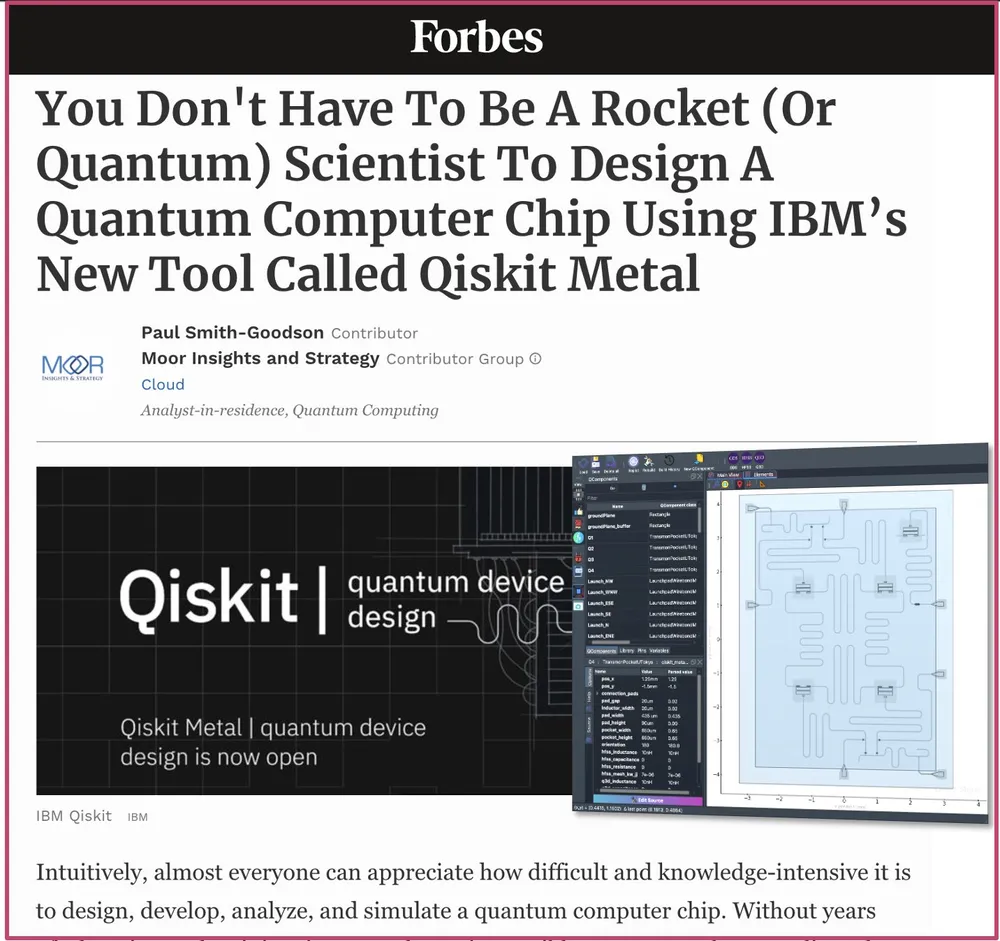
Forbes article on Qiskit Metal, with the Metal design window
2013 onward

Designing quantum chips: EPR, LOM and Qiskit Metal

Designing a superconducting quantum chip means turning a drawing into a Hamiltonian. I set out to make that path open, fast and reproducible, and the tools are below.

  • The first multilayer (2.5D) architecture for superconducting circuits (Phys. Rev. Applied, 2016): the integration of a planar layout with the coherence of three-dimensional cavities.
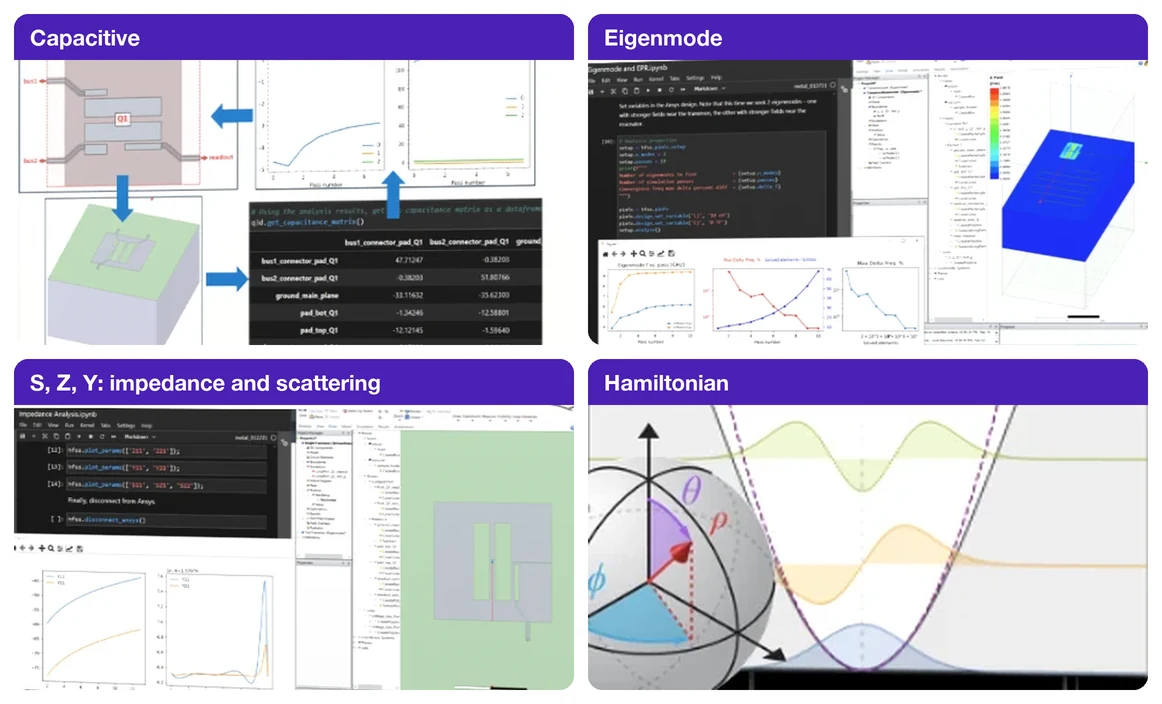
  • Energy-participation quantization (npj Quantum Information, 2021): one electromagnetic simulation gives the quantum Hamiltonian of the whole chip. I shared it as the open-source package pyEPR.
  • Lumped-oscillator models (cQED with modular quasi-lumped models): a chip split into small, simulated pieces, then reassembled into one quantum circuit.
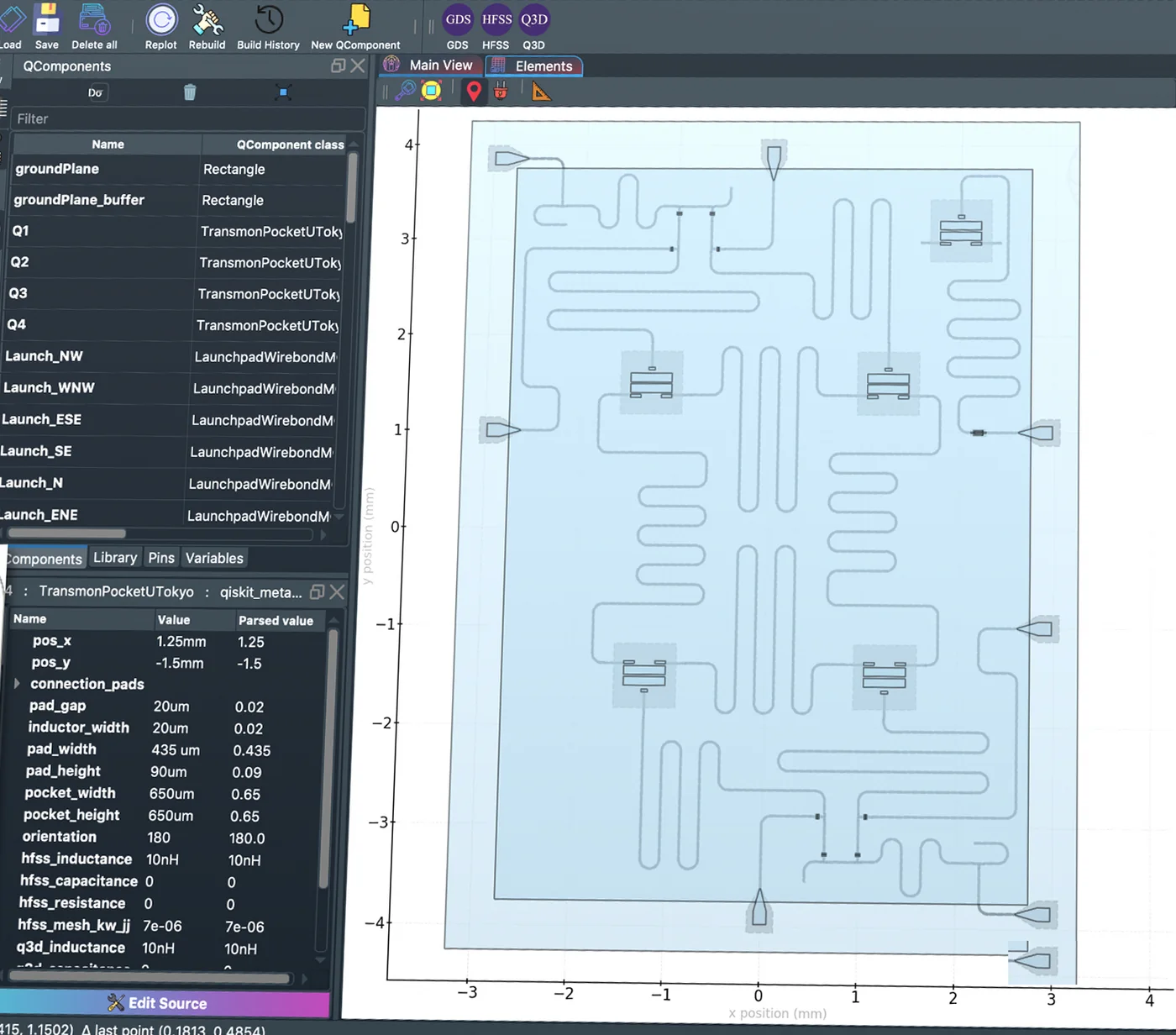
  • Qiskit Metal (now Quantum Metal): I founded and led the IBM team that built the world’s first full-stack, open-source EDA software for quantum hardware (Forbes coverage). Groups around the world have used it to design and fabricate their own devices (a few are shown below).
  • In 2020, MIT Technology Review named me one of its global Innovators Under 35, and I received the John Atanasoff Award from the President of Bulgaria.
Jefferson Awards Foundation logo
2012 onward

Teaching, outreach, and a medal

I lecture at summer schools on qubits, noise and error mitigation, and I founded and hosted the IBM Qiskit Quantum Seminar (170+ episodes and 2M+ views). Back in 2012 I started Open Labs, where graduate students open pathways into science for underrepresented young scholars; it grew from Yale to Penn, Princeton, Columbia and Harvard and has reached more than 20,000 students and parents. Open Labs still runs at Yale, almost a decade and a half later. For that work I received the Yale-Jefferson Public Service Award in 2016.
Selected papers and all research

Open source

Tools I started

Free to use; issues and pull requests are welcome.

More
Creator and maintainer

pyEPR

One eigenmode simulation in, the chip's quantum Hamiltonian and losses out. Written during my Ph.D.

211 GitHub stars · 279 forks · as of 2026-10-25

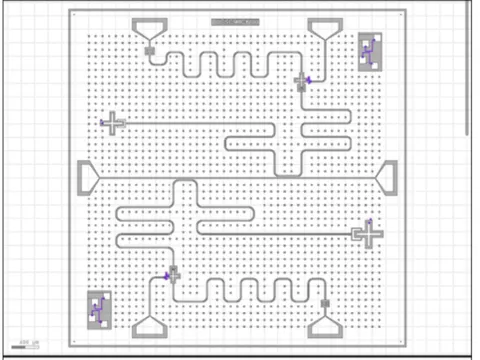
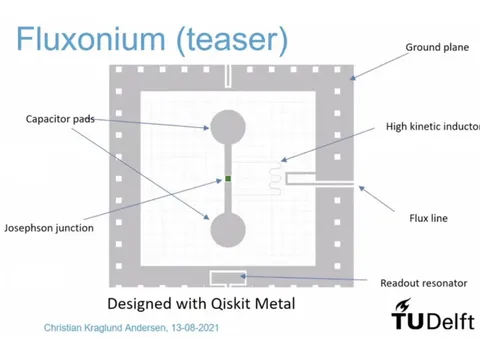
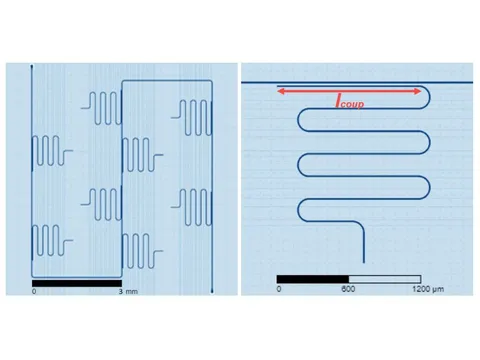
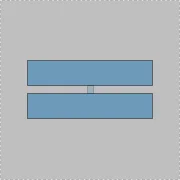
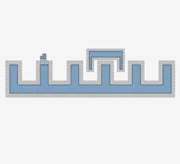
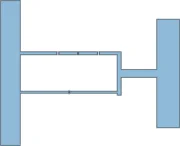
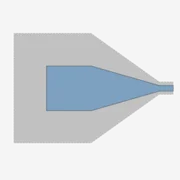
Built with Metal. Chips designed with Quantum Metal by groups in several countries, followed by a few of the components in its library, drawn by Metal itself. (Yes, there is a smiley face.)

  • 12-qubit tunable chip (“Adamite”), SEM12-qubit tunable chip (“Adamite”), SEM
    C. W. Warren, Niels Bohr Institute / NQCP
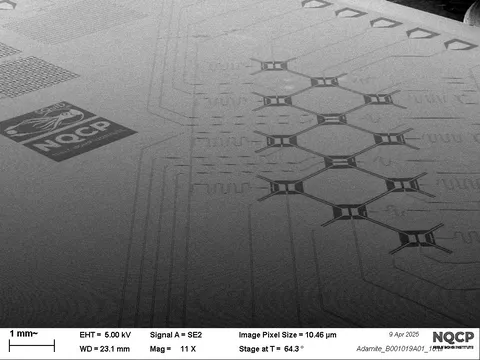
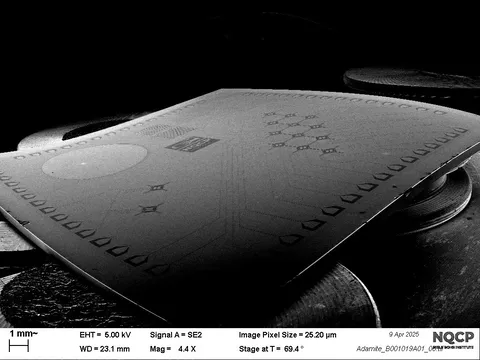
  • Adamite chip, tilted SEMAdamite chip, tilted SEM
    C. W. Warren, Niels Bohr Institute / NQCP
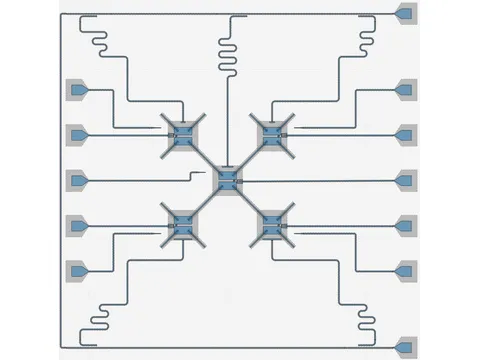
  • Weight-4 tunable-transmon devicesWeight-4 tunable-transmon devices
    B. Joecker, T. C. Thann, Niels Bohr Institute / NQCP
  • Standard-candle devices for fabrication reproducibilityStandard-candle devices for fabrication reproducibility
    T. C. Thann, Niels Bohr Institute / NQCP
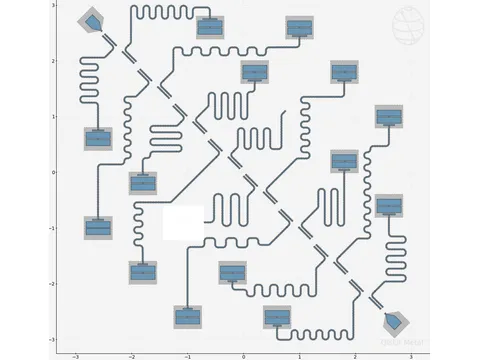
  • Community chip layoutCommunity chip layout
    E. Levenson-Falk, S. A. Shanto
  • Chip with a perforated ground planeChip with a perforated ground plane
    E. Levenson-Falk, S. A. Shanto
  • Fluxonium chipFluxonium chip
    C. K. Andersen, TU Delft
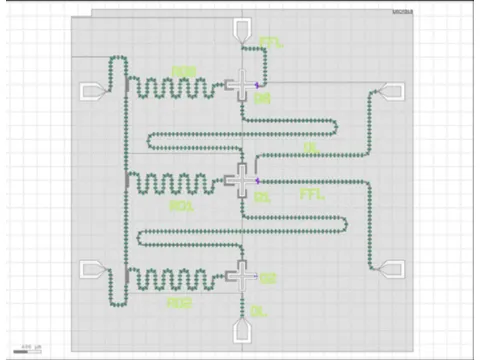
  • Resonator chipResonator chip
    Andersen Lab, QuTech / TU Delft
  • Transmon pocketTransmon pocket
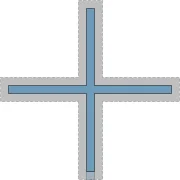
  • Xmon-style crossXmon-style cross
  • Star qubitStar qubit
  • Concentric transmonConcentric transmon
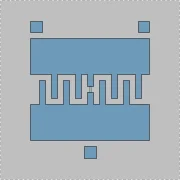
  • Interdigitated transmonInterdigitated transmon
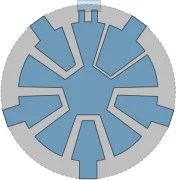
  • Six-port pocketSix-port pocket
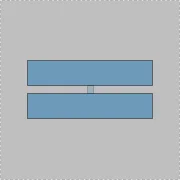
  • Tunable couplerTunable coupler
  • SNAILSNAIL
  • SQUID loopSQUID loop
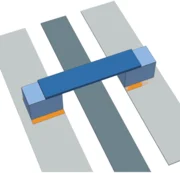
  • Interdigital capacitorInterdigital capacitor
  • Coil resonatorCoil resonator
  • Meander routeMeander route
  • Mixed routeMixed route
  • Launch padLaunch pad
  • Square spiralSquare spiral
  • AirbridgeAirbridge
  • Smiley faceSmiley face

About

A little about me

I'm a physicist who loves superconducting circuits, the tiny chips that behave like artificial atoms, and the puzzle of getting trustworthy answers out of quantum computers while they are still noisy. I learned the craft in Irfan Siddiqi's lab at Berkeley and Michel Devoret's lab at Yale, and I've been lucky to work with wonderful colleagues and students ever since. I love teaching what we learn.

Find the way, go the way, show the way.

I care a lot about who gets to do science. In 2012 I started Open Labs, where graduate students open doors into science for young people from underrepresented communities. It grew from Yale to Penn, Princeton, Columbia and Harvard and has reached more than 20,000 students and parents. I've also served Yale's alumni community, on the Graduate School Alumni Association's executive board and the Yale Alumni Association's Board of Governors. And I keep volunteering for the physics community. I initiated and co-founded the Quantum Device Consortium, an open community that keeps quantum-device design tools free and maintained, and its Quantum Device Workshop. I also help plan the American Physical Society's March Meeting for its Division of Quantum Information, chair sessions, serve on conference program committees, and have organized workshops at IEEE Quantum Week.

A crowded, sunlit Open Labs day at Yale: students, parents and graduate students talking around tables
Step into the shoes of a scientist: an Open Labs day at Yale.
The formal version: education, positions and service

Education

  • Ph.D., Applied Physics, Yale University (2018) — dissertation To Catch and Reverse a Quantum Jump Mid-Flight, with distinction and outstanding contribution to scholarship; Devoret Quantum Lab, advised by Michel Devoret, Rob Schoelkopf and Steven Girvin
  • M.Phil. and M.S., Applied Physics, Yale University — 2015 and 2014
  • B.A., Physics, University of California, Berkeley (2011) — with high honors and distinction in scholarship; research in Irfan Siddiqi's Quantum Nano-Electronics Lab (2008–2011)

Positions

  • Google Quantum AI 2025–present — Lead, Quantum Application Enabling Technologies
  • IBM Quantum 2018–2025 — Founded and led the Qiskit Leap research team (quantum computational science at scale) and the quantum hardware design team that created Qiskit Metal; founded and hosted the IBM Qiskit Quantum Seminar.

Service and outreach

  • Founder of Open Labs (2012), a multi-university science-outreach and career-pathways organization: executive director 2012–2017, chair 2017–2020.
  • Initiator and co-founder of the Quantum Device Consortium (QDC), an open community that maintains open-source tools for quantum device design and simulation, such as Quantum Metal; co-founder and organizer of its Quantum Device Workshop (QDW).
  • Yale Graduate School Alumni Association: executive board (2020–2023), trustee advisor to the board (2019–2020). Yale Alumni Association: Board of Governors (2023–2025).
  • Associate Fellow, CIFAR Quantum Information Science program (2023–March 2026).
  • American Physical Society, Division of Quantum Information: March Meeting planning team (2023), session committee (2022), session chair (2020, 2022).
  • Program committees: Quantum Computing Theory in Practice (2022), Quantum Simulation (2024), Quantum Matter (2024), IQC–CIFAR QuDits workshop (2024), Rochester Conference on Coherence and Quantum Science (2025).
  • Workshop organizer, IEEE Quantum Week (2020, 2021, 2022).

Press

News, media and coverage

A few selected highlights.

Selected recognition
Selected articles and coverage
More coverage
Interviews, radio, podcasts and public talks